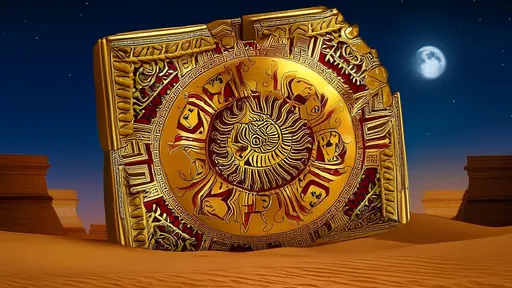
The legend of El Dorado, the mythical city of gold hidden deep within the South American jungles, has captivated explorers and historians for centuries. While the existence of such a city remains unproven, the story itself reveals fascinating insights into the advanced metallurgical techniques of the Inca civilization, particularly their mastery of gilding and gold plating. The term "El Dorado" originally referred not to a place, but to a person—the "Gilded One," a Muisca tribal chief who coated himself in gold dust during sacred ceremonies. This ritual, though symbolic, hints at a deeper cultural understanding of gold’s transformative power, both spiritually and technologically.
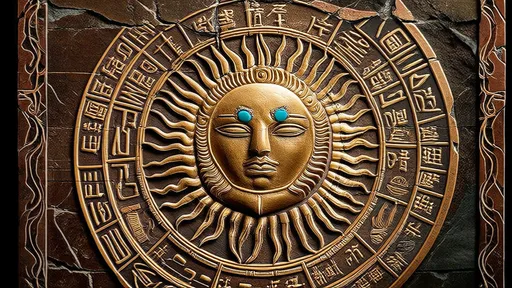
For the Inca, gold was more than a precious metal; it was the "sweat of the sun," a sacred material intertwined with their cosmology. Their artisans developed sophisticated methods to fuse gold onto other metals, creating objects that appeared solid gold while conserving the scarce resource. Recent archaeological discoveries near Lake Guatavita in Colombia—the alleged site of the El Dorado ritual—have unearthed gilded artifacts with microscopic layers of gold applied through techniques resembling modern electroplating. Researchers speculate that the Inca may have used plant-based electrolytes, such as acidic juices, to facilitate the bonding process, a method centuries ahead of European metallurgy.
The gilded votive offerings found in Andean lakes and tombs showcase an artistic precision that defies the primitive tools available to Inca metalsmiths. Using nothing more than stone anvils and copper tools, they achieved gold layers so thin and even that modern conservators initially mistook them for solid gold. This illusion was intentional; the Inca understood that gold’s divine essence lay in its surface radiance rather than its mass. A surviving gilded mask from the Lambayeque culture, for instance, displays gold leaf applied over copper with an adhesive made from tree resin and hematite, creating a seamless, reflective surface that glowed like the sun itself.
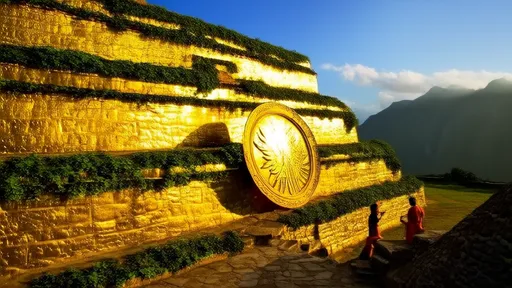
Spanish conquistadors, blinded by greed, failed to recognize the technological marvels they melted down into ingots. Chronicles from Francisco Pizarro’s campaign describe golden temples "clothed in light," their walls sheathed in gold foil so meticulously applied that the seams were invisible. What the invaders dismissed as mere decoration represented a pinnacle of materials science—the ability to make base metals inherit gold’s sacred properties through surface alchemy. Forensic analysis of looted artifacts now in European museums reveals that some gilded objects contained arsenic or mercury as bonding agents, proving the Inca had empirically discovered metallurgical principles that wouldn’t be formally documented until the Industrial Revolution.
The true "golden city" may have been metaphorical all along—a civilization that transformed raw materials through ingenuity. Modern attempts to replicate Inca gilding techniques using period-appropriate tools have proven extraordinarily difficult, suggesting these artisans possessed tacit knowledge lost to time. In the highland workshops of Cusco, metalsmiths likely passed down secret methods through generations, guarding recipes like the closely held formulae of medieval alchemists. The surviving Corpus Christi monstrance in Lima, though colonial-era, demonstrates this legacy—its golden rays are actually silver gilded with a mercury-amalgam technique the Inca perfected before Europeans arrived in the New World.
Today, the quest for El Dorado continues metaphorically in laboratories where material scientists study Inca gilding for sustainable alternatives to modern electroplating. The ancient methods, which produced durable gilded surfaces without cyanide or other toxic chemicals, offer eco-friendly solutions for jewelry and electronics manufacturing. Perhaps the greatest treasure hidden in the El Dorado legend isn’t hoarded gold, but the evidence of an indigenous technological sophistication that reshapes our understanding of pre-Columbian innovation. As laser scans reveal hidden gilding layers on museum artifacts, each discovery peels back another stratum of this golden civilization’s forgotten brilliance.

By /Jul 25, 2025

By /Jul 25, 2025

By /Jul 25, 2025

By /Jul 25, 2025
By /Jul 25, 2025

By /Jul 25, 2025
By /Jul 25, 2025
By /Jul 25, 2025
By /Jul 25, 2025
By /Jul 25, 2025

By /Jul 25, 2025

By /Jul 25, 2025

By /Jul 25, 2025
By /Jul 25, 2025

By /Jul 25, 2025

By /Jul 25, 2025

By /Jul 25, 2025

By /Jul 25, 2025
By /Jul 25, 2025

By /Jul 25, 2025
