The ancient Maya civilization left behind a rich legacy of knowledge encoded in their intricate calendar systems and symbolic imagery. Among their most fascinating contributions is the Mayan calendar印花—a complex visual language that transcends mere timekeeping to reveal profound cosmological insights. These vibrant印花 patterns, once reserved for priestly elites, now captivate modern scholars and designers alike as they bridge the gap between sacred mathematics and contemporary visual culture.
At the heart of this fascination lies the Tzolk'in—the 260-day sacred calendar whose interlocking gears of 13 numbers and 20 day signs create a fractal-like harmony. The印花 manifestations of these calculations appear across temple walls, ceramic vessels, and surviving codices, where numerical values transform into serpents, jaguars, and celestial bodies. What modern eyes might perceive as decorative motifs actually constitute sophisticated philosophical equations about the cyclical nature of existence.
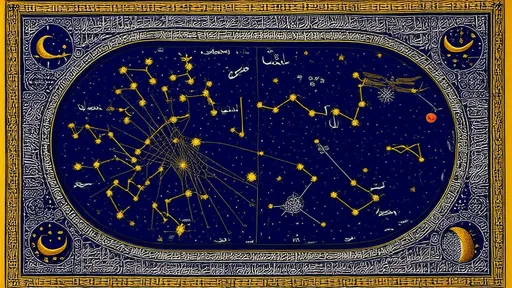
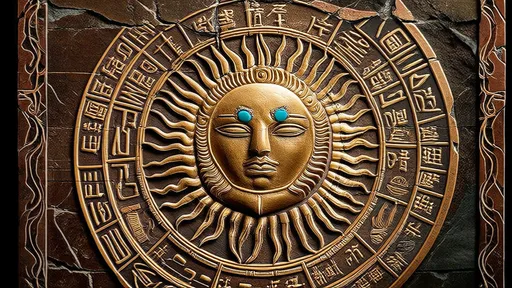
Deciphering these visual codes requires understanding the Maya's unique worldview, where time wasn't linear but a spiral of repeating energies. The印花 patterns frequently incorporate the kinh (sun) symbol intertwined with lunar crescents, representing the perpetual dance between celestial bodies. Water motifs flow through these designs not merely as decorative elements but as embodiments of the sacred life force ch'ulel, demonstrating how the Maya embedded hydrological knowledge into their timekeeping systems.
Contemporary graphic designers have begun adapting these ancient印花 principles into modern visual communication. The logarithmic spirals found in the Dresden Codex's Venus tables, for instance, inspire dynamic data visualization techniques. Meanwhile, the ajaw (lord) glyph's perfect geometric proportions inform cutting-edge typography. This cross-pollination between archaeology and design has birthed an entirely new aesthetic language—one that carries the intellectual weight of Mesoamerican epistemology while speaking to digital-native audiences.
Recent breakthroughs in epigraphy have revealed how certain印花 patterns function as mnemonic devices for astronomical calculations. The so-called "Galactic Butterfly" motif found at Palenque, long considered decorative, has been decoded as a three-dimensional matrix for predicting lunar eclipses. Such discoveries underscore how the Maya transformed complex mathematical operations into elegant visual shorthand—a feat that challenges our modern dichotomy between STEM and artistic expression.
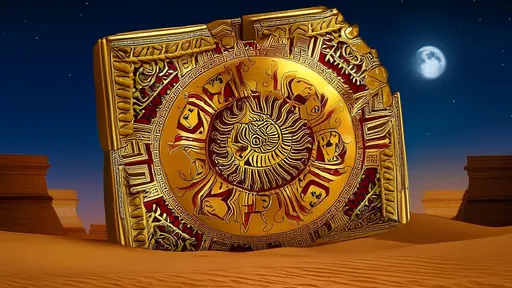
The chromatic symbolism within these印花 designs carries equally profound meanings. Maya blue—the legendary pigment that withstands centuries—doesn't merely represent water in their visual language, but encodes specific agricultural cycles tied to the rainy season. Red ochre stripes in calendar印花 often correspond to solar zenith passages, while the strategic placement of black carbon lines marks the "dark intervals" between ceremonial periods. This polychrome system operates as a sophisticated information architecture that modern UX designers are only beginning to appreciate.
Perhaps most remarkably, the印花 patterns demonstrate an inherent scalability that predates digital design principles by millennia. A single day glyph can expand into an intricate narrative scene when examined closely, yet reduce to a crisp minimalist symbol at small sizes—a quality that makes these ancient designs surprisingly adaptable to mobile interfaces and responsive web design. The Maya achieved this through their recursive design philosophy, where micro and macrocosms mirror each other in perfect symmetry.
As archaeologists continue scanning undiscovered codices with multispectral imaging, new印花 variations emerge that challenge our understanding of Pre-Columbian visual communication. The recently uncovered "Codex Hidden River" reveals previously unknown calendar印花 that incorporate topographic elements, suggesting the Maya mapped temporal cycles onto actual landscapes. This discovery hints at an even more sophisticated spatial-temporal visualization system than previously imagined—one that may inspire entirely new approaches to data mapping.
The enduring power of these印花 designs lies in their dual nature as both precise scientific instruments and profound artistic expressions. In an era hungry for meaningful visual languages that transcend cultural barriers, the Maya's calendrical symbols offer something rare—a bridge between ancient wisdom and digital modernity, where every curve and dot carries the weight of centuries of astronomical observation and philosophical contemplation. As we continue decoding their secrets, we don't just reconstruct an ancient system—we rediscover timeless principles of visual communication that still pulse with vitality today.

By /Jul 25, 2025

By /Jul 25, 2025

By /Jul 25, 2025

By /Jul 25, 2025

By /Jul 25, 2025

By /Jul 25, 2025
By /Jul 25, 2025
By /Jul 25, 2025
By /Jul 25, 2025
By /Jul 25, 2025

By /Jul 25, 2025

By /Jul 25, 2025

By /Jul 25, 2025

By /Jul 25, 2025

By /Jul 25, 2025

By /Jul 25, 2025

By /Jul 25, 2025

By /Jul 25, 2025

By /Jul 25, 2025

By /Jul 25, 2025
