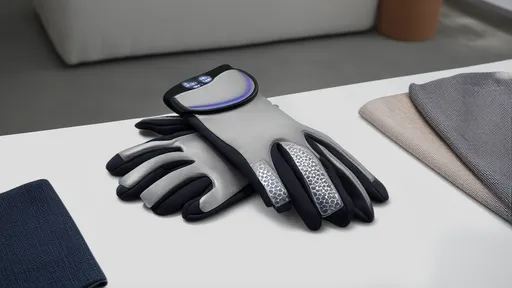
The retail landscape is undergoing a quiet revolution, one that promises to bridge the gap between digital convenience and the irreplaceable sensory experience of physical shopping. At the heart of this transformation lies an unassuming yet groundbreaking innovation: haptic feedback gloves. These sleek, technologically advanced wearables are redefining virtual shopping by allowing users to feel the texture of fabrics before making a purchase—all from the comfort of their homes.
Imagine running your fingers across a virtual cashmere sweater and experiencing the same soft, pillowy resistance you'd encounter in a high-end boutique. Or tracing the intricate embroidery on a silk blouse and detecting every raised thread beneath your fingertips. This isn't science fiction—it's the new reality being crafted by haptic engineers and fashion retailers collaborating to solve online shopping's greatest limitation: the inability to assess material quality through a screen.
The technology works through a sophisticated combination of microfluidic actuators and machine learning algorithms. As users interact with 3D-rendered garments in virtual showrooms, the gloves' internal bladder system inflates and vibrates at precise intervals to mimic everything from the coarse weave of linen to the slippery smoothness of satin. Some premium models even incorporate temperature modulation, letting shoppers discern between lightweight chiffon and warm wool blends through subtle thermal cues.
Early adopters report uncanny realism. Sarah Chen, a sustainable fashion influencer who tested the gloves during Milan Digital Fashion Week, describes the experience as "having x-ray hands that can reach through the screen." She particularly marveled at distinguishing between vegan leather alternatives—a task notoriously difficult through product descriptions alone. "The polyurethane coating had this distinctive plastic-y rebound, while the mushroom leather felt more supple with slight imperfections, just like the real thing," Chen recalls.
Retail analysts predict this technology could dramatically reduce return rates, which currently plague e-commerce platforms—especially for apparel where fabric disappointment accounts for nearly 40% of returns. When shoppers can virtually assess stretch recovery, weight, and drape characteristics before checkout, the guesswork disappears. Luxury brands see particular promise; Balmain recently integrated haptic glove compatibility into their virtual runway collection, allowing VIP clients to appreciate the hand-stitched details of couture pieces typically reserved for in-person viewings.
Beyond commercial applications, the implications for sustainable fashion are profound. Virtual tactile experiences could decrease impulse purchases and "wardrobe turnover" culture by helping consumers make more deliberate, satisfying selections. Some developers are even experimenting with educational modes—gloves that teach users to identify genuine materials versus counterfeits by comparing haptic signatures, potentially combating the $500 billion counterfeit fashion industry.
As with any emerging technology, challenges remain. Achieving millimeter-perfect texture replication across diverse fabric types requires enormous datasets of material scans. There's also the hurdle of consumer adoption—convincing shoppers to invest in specialized hardware before virtual malls become mainstream. However, with tech giants rumored to be developing more affordable, smartphone-compatible versions, haptic gloves may soon transition from niche gadget to household staple, fundamentally altering how we define "window shopping" in the digital age.
The tactile internet era has dawned, and with it comes a profound shift in consumer expectations. No longer content with flat images and speculative reviews, tomorrow's shoppers will demand multisensory engagement—the whisper of taffeta, the resilience of denim, the luxurious heaviness of a wool coat—all transmitted through their fingertips. In this new retail paradigm, the most successful brands won't just sell products; they'll engineer complete sensory narratives that make pixels feel palpable.
By /Jul 25, 2025

By /Jul 25, 2025
By /Jul 25, 2025

By /Jul 25, 2025

By /Jul 25, 2025
By /Jul 25, 2025

By /Jul 25, 2025

By /Jul 25, 2025

By /Jul 25, 2025

By /Jul 25, 2025
By /Jul 25, 2025

By /Jul 25, 2025

By /Jul 25, 2025
By /Jul 25, 2025

By /Jul 25, 2025

By /Jul 25, 2025

By /Jul 25, 2025

By /Jul 25, 2025

By /Jul 25, 2025
By /Jul 25, 2025
