In the fast-paced world of outdoor gear innovation, the self-rolling compression system for instant-dry rainwear has emerged as a game-changer for adventurers and urban commuters alike. This ingenious design eliminates the age-old struggle of stuffing rain jackets into cramped backpacks or dealing with bulky carrying cases. The technology behind these compact systems combines material science with intuitive engineering, creating a seamless user experience that feels almost magical the first time you witness it in action.
The core principle revolves around a specialized internal structure that allows the rainwear to essentially fold itself when not in use. Unlike traditional compression sacks that require manual rolling and squeezing, these garments incorporate flexible memory ribs along strategic seams. When released from their packed state, the jacket springs open to full size with a satisfying snap. To store it, you simply press a hidden button near the collar and guide the initial fold - the rest of the compression happens automatically as the ribs coil inward like a measured spring.
Material selection plays a crucial role in this system's effectiveness. Advanced polymer blends in the fabric provide just enough rigidity to maintain the coiled shape without adding uncomfortable bulk. The outer layer typically features a patented 3D-knit texture that prevents sticking during the compression process, while maintaining complete waterproof capabilities. Some premium models even integrate moisture-wicking channels that accelerate drying during storage, ensuring your packed rainwear never develops that dreaded mildew smell.
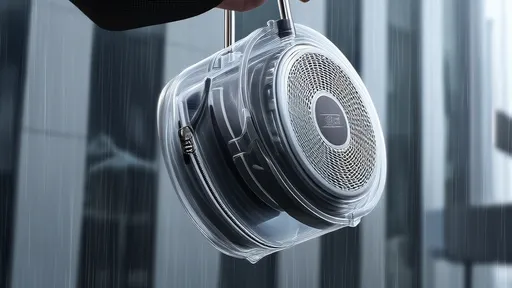
Urban professionals have particularly embraced this technology for its discreet elegance. The compressed package often resembles a slim clutch or small water bottle, easily fitting in briefcases or under airplane seats. Several high-end fashion labels have collaborated with outdoor brands to create versions that look more like designer accessories than outdoor gear when stored. The satisfying tactile experience of deploying and stowing these jackets has become something of a status symbol in certain circles.
For serious backpackers, the weight savings and space efficiency prove invaluable. Traditional rain gear can consume up to 30% of a pack's capacity when not properly compressed. The self-rolling systems consistently reduce this footprint by nearly 70%, with the added benefit of predictable packing dimensions that make load distribution calculations more precise. Through-hikers on long trails report being able to carry additional days' worth of supplies simply from the space saved by switching to this storage method.
The technology isn't without its learning curve. New users sometimes struggle with the precise hand placement needed to initiate the compression sequence, and there's an art to guiding the roll without disrupting the natural coiling motion. Manufacturers have started incorporating subtle tactile markers and instructional holograms on the garments themselves to minimize frustration. Some models feature audible click indicators that signal successful compression milestones, adding another sensory dimension to the process.
Environmental impact studies suggest these systems may contribute to longer product lifespans. By eliminating the uneven stress points caused by haphazard folding, the controlled compression significantly reduces wear on seams and waterproof coatings. Industry analysts project this could double the functional lifetime of premium rainwear, potentially keeping thousands of tons of technical fabric out of landfills annually. Several brands now offer lifetime refurbishment programs specifically for the compression mechanisms, further extending usability.
As the technology matures, we're seeing exciting hybrid applications emerge. Some manufacturers are experimenting with integrating the compression ribs directly into the waterproof membranes themselves, eliminating the need for separate structural elements. Others are developing "smart" versions that can be triggered via smartphone app or voice command, with pressure sensors that prevent over-compression. There's even talk of solar-assisted drying systems that could harness body heat during storage to actively evaporate moisture between uses.
The psychological impact of this innovation shouldn't be underestimated. There's something profoundly satisfying about watching chaos transform into orderly compression with minimal effort. Users report feeling a sense of mastery and preparedness that enhances their overall outdoor experience. This emotional connection has proven surprisingly powerful in market testing, with many customers citing the storage mechanism as their primary reason for purchase rather than the jacket's performance features.
Looking ahead, the principles developed for rainwear compression are already inspiring applications in other gear categories. Tent manufacturers are prototyping self-storing shelters that utilize similar ribbed structures, while sleeping bag designers are exploring ways to apply the technology to bulky insulation. The outdoor industry appears to have found its equivalent of the rolling suitcase revolution - a simple idea that fundamentally changes how we interact with essential equipment.
For those yet to experience this storage revolution, the first encounter often produces audible surprise. The seamless transformation from crumpled fabric to neat package defies expectations shaped by years of wrestling with stubborn gear. As more brands adopt and refine the technology, we may soon look back on traditional folding methods with the same nostalgia we now reserve for paper maps and heavy leather boots - charming relics of a more cumbersome era in outdoor preparation.
By /Jul 25, 2025

By /Jul 25, 2025

By /Jul 25, 2025

By /Jul 25, 2025

By /Jul 25, 2025

By /Jul 25, 2025

By /Jul 25, 2025

By /Jul 25, 2025

By /Jul 25, 2025

By /Jul 25, 2025
By /Jul 25, 2025

By /Jul 25, 2025

By /Jul 25, 2025
By /Jul 25, 2025

By /Jul 25, 2025

By /Jul 25, 2025
By /Jul 25, 2025
By /Jul 25, 2025

By /Jul 25, 2025

By /Jul 25, 2025
