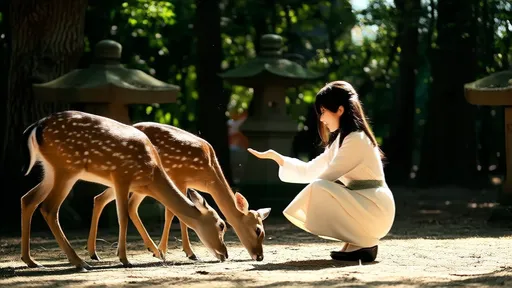
The ancient city of Nara, Japan, is famous for its sacred deer that roam freely through parks and temples. These gentle creatures, considered messengers of the gods in Shinto tradition, have become one of the region's most beloved tourist attractions. While feeding the deer may seem like a simple activity, improper techniques can lead to unexpected encounters of the painful kind – as many visitors discover when overeager deer mistake fingers for food or decide to nudge impatiently for treats.
Understanding deer behavior is the first step toward a safe and enjoyable feeding experience. Nara's sika deer may appear tame, but they remain wild animals with instincts honed by centuries of coexistence with humans. During peak tourist seasons when hundreds of visitors feed them daily, the deer develop clever strategies for obtaining food. They've learned to bow (a behavior reinforced by rewarding treats), but they've also grown accustomed to more assertive approaches when treats are visible but not forthcoming.
The most common mistake visitors make is holding the deer crackers (shika senbei) in a way that invites trouble. When you extend your hand with fingers wrapped around the cracker, deer perceive the entire hand as food. Their teeth aren't delicate when grasping for treats, leading to those painful pinches that surprise unprepared tourists. The solution lies in presenting the food properly - holding the cracker between thumb and forefinger with your other fingers tightly curled into your palm.
Timing plays a crucial role in deer interactions. Early morning visits when the deer are hungriest may lead to more aggressive behavior, while late afternoon feedings often find the animals already satiated from a day of tourist attention. Observing the deer before approaching reveals valuable clues about their current mood and hunger level. A deer that bows politely and waits is generally safer to feed than one that's already nudging or butting other visitors.
Body positioning offers another layer of protection during your deer encounters. Never turn your back on a deer expecting food, as they may interpret this as either an invitation to approach or a reason to give a gentle (or not-so-gentle) nudge. Stand at a slight angle rather than facing the deer directly, keeping your treat-holding hand extended away from your body. This gives the deer a clear target while keeping your torso out of head-butting range should the animal become overexcited.
Children require special consideration when feeding Nara's deer. Their smaller stature puts them at eye level with the deer, creating a dynamic where the animals may perceive them more as peers than superiors. Always supervise children closely, showing them the proper way to hold treats and helping them maintain appropriate boundaries. Some of the more assertive deer have learned to target small backpacks and pockets, so it's wise to keep extra crackers secured and out of reach until ready for use.
The type of treat matters more than many visitors realize. While the specially formulated deer crackers sold by local vendors provide appropriate nutrition, other human foods can cause digestive issues. Feeding them improper snacks not only harms the deer but may also trigger more aggressive behavior as they associate humans with unhealthy food cravings. Stick to the approved crackers available throughout Nara Park, and resist the temptation to offer anything from your own snacks or lunch.
Group feeding dynamics present another challenge worth understanding. Deer have social hierarchies, and dominant individuals often push younger or more timid deer aside when food appears. If surrounded by multiple deer, remain calm and avoid sudden movements. Rather than trying to feed the most aggressive deer first (which reinforces pushy behavior), look for opportunities to offer crackers to calmer animals waiting at the periphery. This helps maintain balance in their social structure while reducing the chance of getting caught in a deer scuffle.
Seasonal changes affect deer behavior in noticeable ways. Autumn brings the rutting season when male deer become more territorial and unpredictable. During these months, extra caution is advised, particularly around bucks with visible antlers. Spring introduces another variable - fawns learning to navigate human interactions. While young deer appear especially adorable, feeding them requires particular care as protective mothers are often nearby.
Beyond the physical mechanics of feeding, cultivating the right mindset enhances the experience. The deer of Nara aren't mere photo props or amusement park attractions - they're living creatures deserving respect. Approaching them with patience and awareness transforms what could be a simple snack break into a meaningful interspecies interaction. Many visitors find that when they slow down and engage mindfully, the deer respond with equal measure, creating those perfect moments that make for both beautiful photographs and lasting memories.
Photography enthusiasts should remember that the best deer photos often come to those who wait rather than those who chase. After properly feeding a deer, step back and observe. The natural behaviors they exhibit - grazing, interacting with each other, or simply resting in the temple grounds - frequently make for more compelling images than the standard "deer eating cracker" shot. Early morning light provides particularly magical illumination for these scenes, with the added benefit of smaller crowds.
Local experts emphasize that deer aggression stems nearly always from human misunderstanding rather than inherent viciousness in the animals. The Nara Deer Preservation Foundation has worked for decades to maintain the delicate balance between preserving the deer's wild nature while allowing for human interaction. By following their guidelines and observing the wisdom of experienced handlers, visitors contribute to this ongoing harmony while ensuring their own safety.
Those particularly concerned about assertive deer can seek out the less crowded areas of Nara Park. While the central zones near Todai-ji Temple see the highest concentration of both deer and tourists, the surrounding gardens and wooded paths host equally charming deer who tend to be less food-focused. These spots offer quieter interactions where the deer display more natural behaviors, often leading to more authentic experiences.
The cultural significance of Nara's deer adds depth to these encounters. For over 1,300 years, these animals have been protected as divine creatures, creating one of the world's most unique human-wildlife relationships. Modern visitors become part of this living tradition when they participate in the ancient ritual of deer feeding - provided they do so with the proper knowledge and respect the practice deserves.
By /Jul 25, 2025

By /Jul 25, 2025

By /Jul 25, 2025

By /Jul 25, 2025

By /Jul 25, 2025

By /Jul 25, 2025
By /Jul 25, 2025

By /Jul 25, 2025
By /Jul 25, 2025

By /Jul 25, 2025

By /Jul 25, 2025

By /Jul 25, 2025

By /Jul 25, 2025

By /Jul 25, 2025
By /Jul 25, 2025

By /Jul 25, 2025

By /Jul 25, 2025
By /Jul 25, 2025

By /Jul 25, 2025

By /Jul 25, 2025
